Thursday, November 11, 2021

Ham Radio Will Save The World! ...NOT

WARNING! WARNING! WARNING! :-) AM / MW radio can be useful in emergencies, as noted on this blog previously. A pic of my Sangean PR-D14, a radio similar to the one on which I heard a recent Emergency Alert System message.

Recently -- a couple days ago, in fact -- I was at home on a day off, doing some writing on my computer, and a strange thing happened: a tornado warning.

I had my nearby radio -- my trusty, mini-boombox Sangean PR-D5 -- tuned to a local AM band talk station. The station was one of the stations in the Seattle metro area -- I had it turned on for background news and info, basically.

So I'm listening and typing away at my computer and voila! The Emergency Action System's data sounds cover up the programming. This normally does not happen. And then, suddenly, a computerized voice comes on, stating that there is a tornado warning, or tornado watch, for a nearby county, about 30 miles (roughly 35-40 km) west of me.

That never happens.

The message repeated a minute or two later. The message was extensive, urging people to 'take cover', get into a basement or a protected, bottom floor room. It was scary to hear.

Now, for those of you in other parts of the US, or other parts of the world -- especially places that have tornadoes -- this sort of warning on the radio may be no big deal. But here in Washington State tornadoes are as rare as it gets. There was one waterspout reported in the 1990s, and my grandmother saw a small tornado in the 1970s, that tossed up some field hay and stripped some leaves off of trees. Other than that, one could probably count the number of tornadoes in my state that have occurred over the past 50 years on one hand and a couple more fingers.

It was a bit shocking to hear this on my AM radio, to say the least.

My Realistic Patrolman SW60, purchased in 1989 but still a good emergency radio for today. Radios like this are great in emergencies. They are light on battery use, and usually have decent to good reception of AM, FM, and the Weather bands.

After the EAS alert stopped and the local station went back to regular programming, I then grabbed my trusty Realistic Patrolman SW60 radio, and turned it to the weather channel -- NOAA's station on 162.55 Mhz. NOAA was broadcasting a continuous warning about possible tornadoes in Kitsap County -- which is where the Bremerton, Keyport, and Bangor Naval bases are located. There were severe thunderstorms in which radar detected vortices, and they were tracking it.

After listening to the NOAA Weather Service for a couple minutes, I thought to myself: "Wait a minute! The 2 Meter Ham Band is also receivable on this radio! Ham radio guys online always talk about the value of ham radio during major emergencies! I'll tune in and listen to the ham guys talking about this rare emergency!"

Now, for those of you who don't know what ham radio is, it's amateur radio, a hobby where you get a license, procure a radio, erect an antenna of some type, and communicate with other 'hams', even across the world. Guys do it by Morse Code ("CW"), they do it on sideband, and even digitally, which is a growing and effective part of that hobby.

I have always been aware of ham radio, and know that the 2 Meter ham band is not too far from the Weather band. In fact, there are a few radios you can get that have AM-FM-SW-Weather Band and the 2 Meter ham band. Those radios are sometimes advertised as being great for emergencies because of the 2 Meter ham band being included, along with the Weather Band.

So I tuned my radio away from the continuous tornado watch on 162.55 Mhz, downwards to the 144 Mhz portion of the VHF-Hi spectrum, which is were the 2 Meter Band is -- and the 2 Meter Band has usually been one of the most popular ham bands.

To my surprise, there was nothing but hiss. No hams talking about the possible emergency situation. No emergency networks checking in. Nothing.

Just 'crickets'.

This was on a radio that I used to always hear plenty of chatter on when tuning the 2 Meter Band. Day or night, there would be at least some activity there.

HAM RADIO FORUMS and SWL -- An Interesting Mix

The reason I bring this all up is because if you are a radio aficionado, and you have an internet connection, chances are high that you have checked out the ham radio forums. There are several radio forums that, even if they are not dedicated to ham radio, they at least have several sub-forums where the ham guys hang out and talk about the importance of ham radio, rigs, antennas, and other ham topics.

Some of them are really gung-ho. If you mention that you haven't heard much activity on the ham bands, and you are just a listener (like me), they'll often come back and ask you "Why haven't you got your ham license yet?" They may talk down at you because you do not have a ham license, despite the fact that you may have been in the monitoring hobby as long, if not longer, than they have been a ham. Most of the ham guys are decent people, but some of them online are total jerks. And when enough of them do act like total jerks online, it really makes amateur radio hobby look bad.

TEOTWAWKI & SHTF 

All that said, there is this undercurrent in ham radio land that somehow when the world is in the process of being blown to bits by meteor strikes, devastating earthquakes, tsunamis, coronal mass ejections, EMPs, or nuclear warfare, ham radio will be there to save the day. Ham radio will be that last line of communication necessary to save civilization! This is despite the fact that ham radio didn't save the day during Hurricanes Katrina or Sandy, and despite the fact that during this recent half hour of tornado warnings in a state where such a warning is a very big deal, the 2 Meter Band -- despite the fact that there are apparently 10-20 repeaters in the region -- was dead, dead, dead.

I'm not writing this to knock ham radio's relative importance. In a disaster, ANY communication medium is important. I've written before on this blog that AM radio may be the best disaster communication medium if a TEOTWAWKI or SHTF event occurs. I would include ham radio and even CB radio in that category as well. Some FM stations may still be on the air and operating.

But the problem biggest problem with ham radio is: ham radio is dying.

Now, as long as I've had radios with BFO or SSB capability, I've tuned through the ham bands. I have heard KC4AAA in the South Pole when it was handling DX 'pile ups' from the US and Canada. I've heard rare stations like A7XB (no longer active, I think), in Qatar -- an American who was apparently living there in the 1980s. At the time, countries like Qatar were still unknown to Americans -- this was pre-Gulf War. The pile up of stations trying to talk to A7XB was massive.

I've heard some of the exotic DXpeditions, although -- because I live in a hole, I haven't heard many of the actual DXpedition stations, but I still have heard the overall activity. I've heard stations from Indonesia and Malaysia chatting in English and sometimes Malay during the early mornings on 40 Meters. I've heard stations from all over the world during ham radio SSB contests. 

EVEN SANTA CLAUS IS A HAM RADIO GUY

Before the SW conditions hit the toilet in 2017, I even heard Santa Claus talking to little kids in the US, from his home in northern Finland (I think he was in Oulu, which is a city on the coast of the Gulf of Bothnia). Santa was on the 20 meter band, early Christmas Eve. One little girl said "I love you, Santa!" It was fun to hear ham radio being used to make kids happy.

So, as you may be able to tell, I have always enjoyed tuning in to ham radio.

But I've also noticed that over the past several years, the bands are relatively dead, unless there is a contest. It wasn't always that way -- even during sunspot cycle downturns, there was activity.

A DIMINISHED HOBBY -- Still Important, But Fading

It's definitely diminished. The 2 Meter Band is an example. When I first got my Realistic Patrolman SW60 in summer of 1989, I heard 2 Meter activity day or night. There was always someone on. The local aerospace company had a lot of workers who were hams, and they even had a club where they put up 2 Meter repeaters, including one which was very popular. Now, even if those repeaters are still working, there is mostly silence. After doing some research, it seems that most of their repeaters, save one on 440 Mhz, are gone.

And anymore, any time I tune the 2 Meter Band, it's just hiss. It's not the radio -- it still picks up the local airports and the weather channels on the same frequency band and range.

A regular weekend? No activity.

Tornado warning? No activity.

Even though I am not a ham, and never will be, because of the cost involved, and because I just don't see the value in it for me personally -- it's sad to see a radio hobby of any kind die.

On the ham radio internet forums, periodically this subject comes up. The ham operators who have been in the hobby for more than a decade know that things have changed. And someone always brings up an online map showing various contacts between continents, proving that there is as much activity as ever. Yet my radios tell me differently, and other long time SWL's (and even some hams) will say the same thing. 

Someone then will bring up the increased numbers of hams as retirees get licenses and buy radios. But many, if not most, of those licensees are inactive, and many ham radio operators admit this. Online you can find databases of hams in your general area. In my area there are technically 5-10 hams within a couple mile radius. I've never heard any of them on the air. 

One guy, who I did hear on the air once, had a very large tower -- right in front of his house -- maybe a mile or so from me. He moved out of the region a couple years ago, and that proud tower is now recycled beer cans, and the concrete base has long since been pounded into dust.

Not Just Ham -- MW RADIO Is Also FADING

Unfortunately, we who are in the radio hobby in general are seeing similar things happening to SWL and MWDXing. Aside from a few Chinese, Tecsun and Sangean radios, new SW models are fewer and fewer. Stations are slowly leaving the air. Propagation conditions are miserable or poor. Online, even MW DXers complain about the state of the band: "the music's all foreign language", "nothing but right wing talk and sports", etc. 

In a way, I understand their frustration, even though they are definitely exaggerating. There still is plenty to listen to. Any given night I can hear the CBC, with their variety of programming and news; KGO's interesting talk shows; stations playing South Asian music, Country music, or Classic Hits; the BBC overnights on KOAC (550 khz out of Corvallis, Oregon); some Canadian talk stations; and other variety programming. Most nights if I tune to XEPE 1700 -- a station out of Tecate, Mexico -- I can hear pop hits from the 1970's to the early 2010's. But if you're not into those types of entertainment, MW DXing can be a wash.

All that said, I am convinced that MW will be alive and well for at least another 10-15 years. There will be plenty of North American stations left to DX. 

As for Shortwave? I'm not so sure. I'm not even sure about ham radio activity being plentiful in 10 years. By the time the sunspots pick up in three or four years, will there be that much to hear in the SW spectrum?

It's a dilemma, but I will repeat the mantra I stated several blog posts back: GET 'EM WHILE YOU CAN.

In 2001, the SWL magazines were bemoaning the BBC stopping broadcasts to North America. Radio Nederland, which took up the torch, then left the air. Radio Canada International then left the air. The SW magazines of the time were full of letters to the editor, pronouncing doom and gloom. Yet the early 2000s were still a goldmine for Shortwave listening compared to today. I heard tons of signals every early morning, and plenty at night, too.

Just under ten years ago, I could hear CBers from South America; hams from Borneo; SW stations from Brazil, Chile South Africa, Singapore and Thailand; and even Vividh Bharati broadcasting South Asian movie music most evenings on the 25 or 31 Meter SW bands. A lot of it I could hear on my Grundig G2 just off the whip antenna. Even though a lot of the big broadcasters had left the air, there was still a lot to hear just ten years ago. Compared to today, those years were a goldmine of listening.

My point is -- ten years from now, or twenty years from now, this space in time, and this decade may be the goldmine that you look back and go "wow, I remember when I could tune across the AM band and hear all sorts of stations." Or, "I remember when I could still hear WWV before they took it down." 

If you're a ham, you may be saying "Wow, there was still a lot of activity on 40 meters back then.."

You never know.

I try to stay positive about it. Have to, really. We all probably should.

A shot of empty store shelves over a year ago, when the pandemic first hit. Hopefully, the shipping and supply chain issues in the news recently do not cause a repeat of empty shelves.

IN OTHER LIFE....

Right now my work has been on a somewhat extended leave of absense. I probably will be seeking other work, as soon as I get a booster vaccine shot. Being that I had no ill affects from the previous one, I have decided that yes, I will get the booster. I also take my supplements to help my immune system -- something I've done for years. I have cut back on ginseng, because I think my body is tired of it. But garlic extract, zinc (which most men need especially), and a few other supplements I take on a daily basis.

I still have been doing a bit of fiction writing, and playing slide guitar, improving my accuracy.

Our economy seems to be holding to a strange pattern. Prices of some items have gone up, price of gasoline has gone up, some food prices have climbed, and quality varies more than it used to -- and I've noticed for the third straight week that the canned pet food shelves are partially empty. The shipping and supply line issues are a bit concerning. 

My Halloween Jack O' Lanterns from 2019. This year I just put out a few of my electric ones. It was a low key Halloween when compared to previous years.

Halloween is my favorite holiday. This year, I only put out my electric Jack O' Lanterns. I had maybe 9 trick or treaters -- if you include the parents. I always give candy to the parents, if they want one. Halloween is a good time to interact with the neighbors on a fun basis. We had a cold holiday this year -- it was freezing the night before. And Halloween this year also was on a Sunday night -- so those factors, and the pandemic still being with us -- all probably added to the low numbers of trick or treaters.

Sammy the Cat (grey cat in front) R.I.P. -- Boots the Cat, in back, is still thankfully very much alive.

I am ending this post with a pic of my cat Sammy, who my neighbor found dead on his driveway. I don't know why she died, but she used to greet me every time I came home from work -- she'd be right on the car, meowing, like she was my little welcoming committee.

Now she rests next to Pudge, my cat who died last November. They are out by the hawthorn tree.

I hope this finds all of you readers safe and doing well. During this continuing pandemic, we all need to count whatever blessings and good things we may have.

Peace.

C.C. -- Thursday, November 11th, 2021.


Tuesday, September 28, 2021

Some Thoughts On A Dream Gone Wrong


Gabby Petito, on the California coast. From her YouTube. 

As many, if not most of you are probably aware, social media poster and traveller Gabby Petito was found dead in a remote area of Grand Teton National Park, in the US state of Wyoming, It's a sad end to a tragic series of events involving Gabby and her boyfriend, who is now apparently wanted by Federal authorities in connection with her murder.

Now, I hadn't been following the news much over the past few weeks -- outside of the brief news reports I heard on the radio while writing, I haven't paid much attention to news. I've just gotten burnt out on it. 

But I kept seeing references to a "lost blonde girl" in social media, and a couple days later someone on Facebook posted a pic of Gabby which was taken when the Moab Police (in Utah) pulled over the white van, in which she was riding, for erratic driving. The boyfriend was driving.

In the pic, Gabby was crying. There was talk about how the police handled the situation, as it appeared Gabby was possibly a victim of abuse. There were some people talking about how Gabby was travelling across the country, living her dream. But in that pic, her sadness was deeply touching.

The pic struck me -- she was such a pretty girl, was living a glamourous life of travel and adventure -- and here she was, miserable. Why?

It turns out that she and her fiancee had a tumultuous and probably violent relationship. And it also appears that her boyfriend Brian Laundrie was verbally (and physically, according to witnesses) abusive -- witnesses had seen Brian hit Gabby and slap her on one occasion, and witnesses also saw her crying in a Mexican restaurant in Jackson, Wyoming, not too long before she disappeared. Her boyfriend was described as volatile, enough to where the witnesses were concerned. In the police video available to see online, Gabby mentioned that he had struck her.

I checked out some of the Moab Police bodycam footage, and a few other videos about Gabby, and then I found Gabby's Instagram, which is still available online to see. 

Gabby's Instagram is full of pics that make it look as if she were living a dream life: there's pics of her on the beach, pics of her posing in the mountains, posing in front of murals in California, and even a couple pics of her near the beach in Costa Rica. There are pics of her and her boyfriend hugging, laughing, enjoying life together. From the pictures, the two appeared to be in love, nothing but happy, and living their dreams.

Apparently, Gabby's dream was to be a "travel blogger". Now, I know a bit about blogging, and know a little about social media, but I hadn't heard of "travel blogging" before. I knew that some people blogged during travel, but wasn't so aware of it being a big thing. But I guess there are people who travel all over the US, Europe, and all over the world, and they blog about it, and have lots of followers.

Gabby's Instagram is undoubtedly an example of this: she has 1.2 million Instagram followers. Gabby's posts on Instagram had the hashtag "VanLife". I wasn't aware that the idea of living out of a van was a big social media deal, but I guess it is.

Gabby wanted to have a successful VLOG website -- a video blog, based on her travels with her fiancee. She had been working on her website the day the cops pulled them over when they were fighting. It seems that Gabby -- 22 years old, who had just quit a nutritionist's and pharmacy tech's job to travel and blog -- had a dream of being an internet personality. Both Gabby and her boyfriend were described as online 'influencers' -- people who post pictures and videos online that bring in lots and lots of followers. Many people apparently make a lot of money being influencers.

Perhaps Gabby was aiming for that goal -- to be a popular influencer.

I won't go into more detail on what happened. It appears Gabby was murdered in some remote campsite in the Tetons, and a lot of evidence points to her boyfriend as the murderer -- right now, as I write this, he is a fugitive. 

But I can't get over the tragic nature of what happened to Gabby Petito. I've known girls like her in the past -- they dreamed big. There are a lot of young women who dream big, using the internet and social media as a platform to achieve their dreams. All one has to do is peruse Instagram for a while and you'll see all sorts of examples. It's not difficult to find attractive young women who have thousands of followers, their social media loaded with fashionable photos. Like Gabby's Instagram, their pics often reflect the perfect life, where nothing goes wrong, and all is happiness. 

In some cases, perhaps it's illusory. In others, maybe it's real.

Gabby Petito didn't have that luck She had her whole life ahead of her, and a big dream of making a living as a travel blogger. Now she's gone.

Rest In Peace, Gabby. You deserved better, no matter what the circumstances. You deserved a chance to pursue your dream, to find your happiness, and be known for your travels and your pictures and videos. But not this way.


Tuesday, June 29, 2021

The CB Mystery of "GI Joe" in Belize -- and 105F in the Shade

My venerable Cobra 148GTL, a terrific CB/SSB radio -- and it still works. I took this pic in 2011 and was hearing a mess of skip signals on channel 6, just off a small whip attached to the back of the radio. Over a decade earlier, I was able to talk to Texas, Alaska, California and Mexico with this radio.

I hang out at several radio forum websites, under different pseudonyms, and often at these forums the subject of Shortwave radio comes up. 

And CB radio (also known as the 11 Meter Band) often is raised as a SW-related subject, as well. The ham guys on the ham sites seem to decry CB, making fun of CB operators. The MW and SW guys seem to have a more positive view of the 11 meter band.

I'm old enough to remember CB, during the last edge of its heyday, which was during the turn of the decade, just when the 1990's began. The sunspots were up, and the 11 Meter Band was hopping with activity. It wasn't long after 1991-1992 that the sunspots started their dip, and then the internet cut into the Shortwave radio band's popularity, and CB, too.

But as late as 1990, even with a CB radio plugged into a whip antenna stuck into the back of the set, you could hear much of the world. I bought a SSB CB radio (Uniden 122) and then a second, better one (Cobra 148), and even just using the legal channels (my radios were, and are, both 100% stock), I could hear Latin America, Hawaii, Canada, the SE US and Texas, California, and even Australia. And most of this long distance CB skip was on sideband.

During this period, I built an 11 meter quad antenna. With the quad I was able to talk to Northern California fairly often, and also parts of Canada and even Alaska. One of the more interesting convos I had was with a guy driving a truck up the gravel highway that runs from Fairbanks to the North Slope / Prudhoe Bay region of Alaska. I don't know what the name of the road was back in 1989, but now it is called the Dalton Highway:

Dalton Highway - Wikipedia

The Alaskan trucker was driving up into the isolated, desolate looking, and majestic appearing Brooks Ranges when we talked. He said a lot about the highway, and we also talked fishing -- in Alaska they have a lot of big lake trout. That 'QSO' was one of the standouts.

My Realistic Patrolman SW-60, a portable radio that runs on 4 C-Cells for a long time. When I first got it, of course, there was a lot more activity on the SW, VHF, VHF-Low and UHF bands. I heard my only satellite on this radio, just off the whip -- a weather satellite beeping around 136 Mhz. For a non-TRF model this radio does really well on MW at night. It's probably a good emergency and camping radio for those who still have them, as it gets MW and FM well, and also the Weather band.

The quad antenna also came in handy for VHF Low Band 'skip' on my Realistic Patrolman SW60. The radio has provision for an external, balanced antenna (via Motorola style jack) so I plugged the quad into the radio and tuned the VHF Low Band. The 11 meter quad antenna was tuned close enough to the 30-33 MHz portion of the VHF Low Band that I heard Louisiana accented guys talking about oil rigs -- in clear FM, as well as other Texan and Louisiana accented speech.

After building that quad antenna, I built a three element, wire beam, which aimed South-East. I hung it by ropes from the house, the other ropes attached to some poplar trees. With that antenna I was able to talk to Texas, New Mexico, Louisiana, and Coahuila and Chihuahua Mexico. Because I know some Spanish, I made contact with some Mexican sideband CBers on their favorite sideband channel of that time, which (I think) was the upper side of channel 29. The main way to call "CQ" was "Hola Once! Hola Once!" (hello 11, hello 11).

So I have quite a few fond memories of talking on the CB sideband.

THE STRANGE SAGA OF BELIZE'S "GI JOE"
But then there was a CB mystery, which has always puzzled me. It's almost like the CB radio version of an urban legend, but this guy was very real... he was the mysterious guy who was on CB skip every afternoon during the summer and fall of 1989 or so -- a guy who called himself "GI Joe".

I was working at a college radio station at the time, and sometimes I would hook up my CB to a magnet mount antenna atop my Ford sedan car, and switch the CB on to listen to the CB sideband channels while commuting, and sometimes I would listen a while in the parking lot just before going up to work -- and there he'd be, most afternoons: "...this is GI Joe.... Just an old soldier... I'm in Belize..."

He had no call letters or 'unit numbers', like sideband people had back then. Just his 'handle': "GI Joe".

He always had tons of US stations trying to talk to him, and some Canadian stations, too. Some of them didn't know (or hear correctly) where "GI Joe" was located, so sometimes he'd spell out the name of the country ("it's B-E-L-I-Z-E...") -- and sometimes he would even tell them where it was on the map (in Central America, near Guatemala, Mexico's Yucatan Penisula, and Honduras). 

"GI Joe" never talked about the conflicts going on in Central America at the time (US involvement with the Contras), nor did he say exactly where he was, but at least once he seemed to mention an offshore island (Belize has a couple offshore, barrier islands). He sometimes mentioned the weather, which he always said was warm.

Of course, because F2 skip was on (the peak of the solar cycle), "GI Joe" was usually heard very well. I don't remember him saying what kind of radio he had, but my guess is that his radio was probably a ham rig like a Yaesu or Kenwood, tricked out for the CB band, because he got out so well.


And for a couple months it seemed that every afternoon, I heard him... "This is ol' GI Joe, in Belize, calling CQ..." You can't necessarily tell a person's age from their voice but he sounded like he was close to retired.


Any time he made a call, there was a 'pile-up' of stations trying to reach him -- from the Southern states of the US, from Texas, from Florida, from Ohio, from Ontario Canada... "GI Joe" had quite a draw. I think I remember him talking to a guy in Utah or Colorado or California, but never anyone in the Northwest US. Of course, this was years ago, and I'm going by memory.


He didn't say too much about his life, aside from mentioning now and then that he had been a soldier. I don't know if he was married, divorced, widowed, or whatever. He also didn't specifically say where he was, like ham radio operators will do.... aside from him being possibly on an island with a beach, and I think he said he was living in a camper or caravan trailer. I tried to talk to him more than once but never got through.


I stopped hearing him some time during the early 90's, and I never heard him after that. Also, internet searches came up completely blank. There apparently is a store by that name that shows up in searches -- but it's not him, obviously. One would think he'd been mentioned somewhere on CB forums because of all the guys (and women) who talked to him, but nothing ever came up. Even searches of radio people in Belize comes up blank.


A lot of Americans apparently retire or move to Belize. I have found that out from internet searches. "GI Joe" obviously was one of them -- probably sold his house and stuff and either drove a camper van to Belize, or somehow got a hold of one when he moved there. But who he was? We will never know.


I rack it up as a mystery. He was just a guy who -- with just a simple CB radio and a decent antenna -- talked to probably hundreds of people every day of every week, and then eventually disappeared, into the ether.


If you're still out there somewhere, "G.I. Joe", this one's for you, and stay safe.


Dry, packed earth -- a pathway just off the bicycle Trail that a lot of people use as a detour. It's what's left of the Milwaukee Road railroad grade. The dirt is drier than I have seen it in a long time. Although this photo was taken a few days ago, I'm certain that our heat wave here made the dirt only drier and even more hard-packed.

HEAT, HEAT, AND MORE HEAT

Here in the Seattle area we're not used to heat. "Hot" to us is 85 degrees F (about 29C), and 90-95 degrees F (35C) is really hot. It usually hits 90F about 4-5 times a year. 100 or greater is rare.


When I was a kid, usually once a year the temperature would break 100. Now, to you folks who use the Centigrade system in the rest of the world, 100 to us is similar to what 40 is to you: a round number that means SUPER HOT. When I was a kid, 100+ temperatures were exciting for some reason. We'd all talk about it, how hot it was. I remember at least 3-4 times the thermometer hit 101 and 102. Never hotter than that.


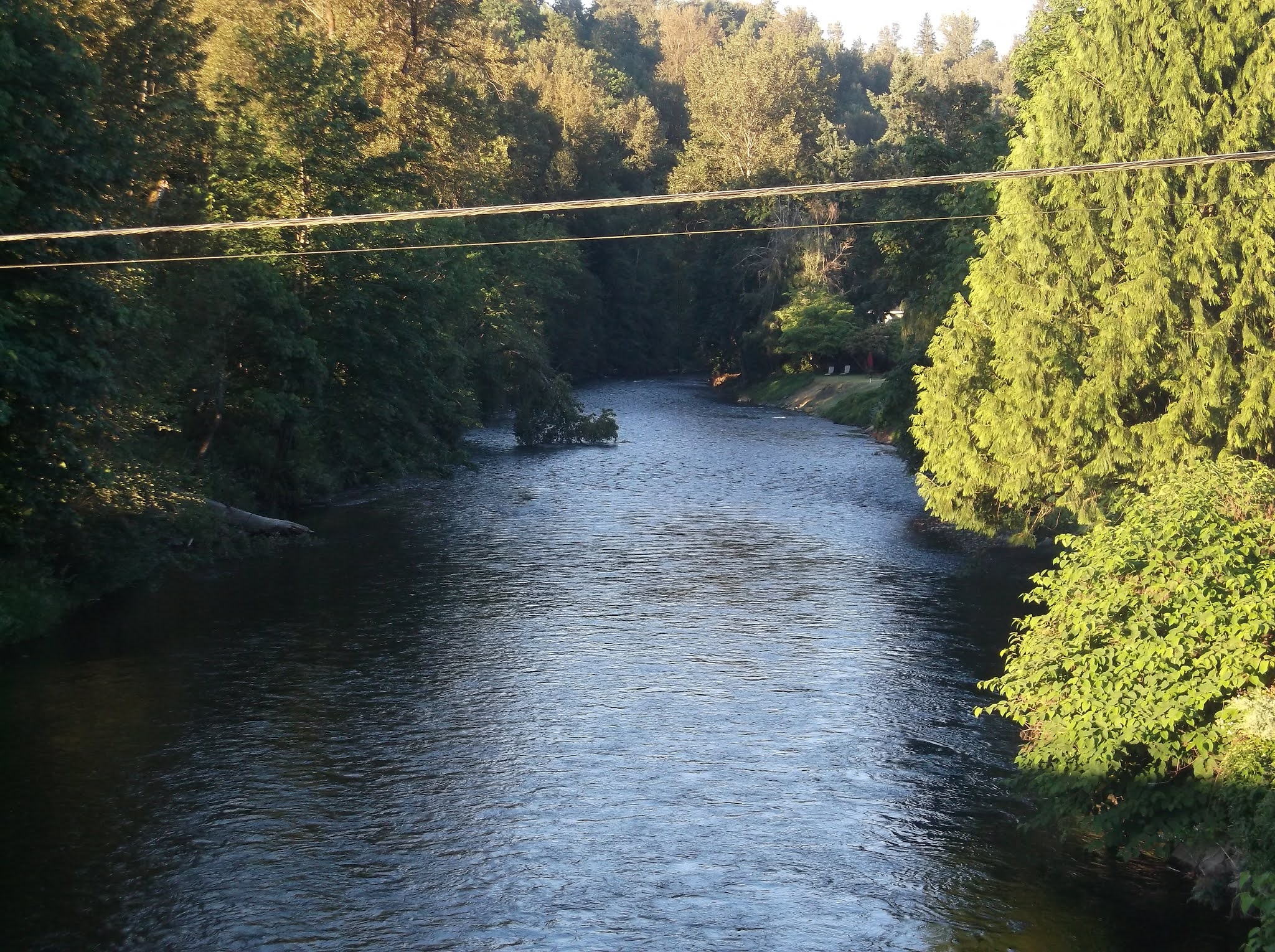
The clear, sun-sparkling waters of the Cedar River when the sun is high in the sky and warm temperatures and river recreation beckon.


Last week they told us that there was a heat dome building in the Western US, and that we'd have record breaking temperatures over the weekend, and into Monday. They were right. About 200 miles north of us is a small town in British Columbia, Canada called Lytton. It's in a relatively dry area (rain shadow) NE of Vancouver, BC. It was 118F there -- that's 48C. That's HOT.


Here in Seattle on Sunday it was 105 (40C), and on Monday it was 108 (42C) on my front porch. For us, that is REALLY HOT. Especially for rainy, moderate weather Seattle. The hardest part of it was trying to sleep, because the rooms in the house were still hot, and most people here in the Seattle area do NOT have air conditioning. Just fans. And if the power goes out during the heat (which it did for a couple hours), you don't even have the fans. :-(


Thankfully, it's cooling down over the week!


I notice I have a couple new readers from parts of the world... One from Colombia (new country), one from Luxembourg (new country), several from Croatia (new country, I think), one from Belgium (a rare check-in), and Japan, Pakistan, India, Indonesia, Australia, Germany, Canada, Brazil, Argentina, Portugal, Italy, Netherlands, Hungary, Romania, and the Czech Republic all have checked out the blog. Usually, half of my readers are overseas. I hope your temperatures are moderate and you're all well and safe. 


Peace.

C.C. June 29th, 2021.


Saturday, June 26, 2021

SOLSTICE SUNRISE

Solstice Morning Idyll -- the rising sun through the trees.
In the past, I have written several articles about Summer Solstice, including pictures of the sunsets, sunlight, sunrise (generally through the clouds), etc. 

I've always been fascinated by the Solstices, sometimes tracking the sun's apparent movement as it sets and rises, including marking the trees on the distant hillsides where the sun come up, and goes down.

This year I didn't catch any sunset pics. But I did get out during Solstice morning, the a.m. of June 21st.

So here are a few of the pics I took, including a couple I took through the trees when the sun had just set on the early evening of June 21st.

A frog pond and bicycle trail on Solstice Morning. The morning was pleasant, with the air fresh and cool.
Looking east, the sun just rising over the hills to the left of the picture.
A lone pigeon sits on one of the electric wires near the river. Often there will be 10-20 pigeons there.
The Cedar River in the Solstice sunrise.

All these pics I took with my newly awakened Fuji AX655, 16 megapixel digital snapshot camera -- the camera which froze up on me in 2016 and then fixed itself after sitting on my desk immobile for 5 years. There is a post about that here: Interrock Nation: My FUJI AX655 16 Megapixel Snapshot Camera Fixed Itself

The Cedar River, lazier flowing than usual, in Renton on Solstice Morning.
The Renton skate park at night, June 21st. It was shut down during the Corona lockdowns, but things are back to normal now.
The big Cottonwood tree near the trail, Solstice Morning.

A FEW WORDS ABOUT MY EXPERIENCE WITH THE 'JAB'
Nothing else much has been happening here. I've been off work. 

After getting my second Pfizer jab, I have had no side effects I can think of, aside from the time I work up in the middle of the night, and my heart was racing a little for about a minute. Then it settled down. It didn't happen again. I also had a slight muscle pain behind my neck. Whether that was from oversleeping or whether it was a side effect of the vaccine I don't know. My left arm, where I got jabbed, was a little sore for two days.

That's it.

My elderly mother got both Pfizer jabs and all she had was a sore arm -- no other side effects whatsoever.

My ZebraKenko, purple 10-speed bicycle -- Japanese made in the 1970's. Still hitting the road in 2021.

I'm going into detail about my experience with the 'jab' here because there is still a lot of paranoia about the vaccines here in the US. I myself measured out the pluses and minuses of risk -- I figured it was better to get the jab and deal with a few side effects, rather than catch corona and risk a ton of health issues.

For what it's worth, I still take garlic extract and zinc every day, as well as a few other supplements. I've been taking garlic and zinc for years.

My Grundig G2, my favorite go-to SW radio. It performs as well off the whip as my other radios perform when connected to a 25 ft. (10 meters) indoor wire. On SW, these small DSP-chip radios can really perform.

IN OTHER, NON-HEALTH RELATED THINGS:
On Shortwave radio, I've been experiencing the same mostly dead SWBC bands as I've experienced over the past 4-5 years. I have heard Voz Missionaria just barely, on 9665 khz, and Radio New Zealand is amazingly strong during the evenings on 7245 khz. I believe their antenna system amplifies the effective power by 16 db towards the Pacific Ocean Islands region, so we here in the Western U.S. receive that benefit.

I also heard the BBC broadcasting to West Africa, in French, from the UK on 9410 khz last night. It was weak, but readable. The signal had over-the-pole choppiness to it.

Early in the morning a couple days ago I switched on my Grundig G2 and tuned around the 49 meter band. It was the first time in maybe six to eight months I tuned the 49 meter band during that hour. Usually, early mornings is when the "Asian Pipeline" comes in. That's my name for the plethora of Asian stations I hear early mornings when the SW conditions are good.

When I first got my G2 in 2014, I tuned around the 49 and 41 meter bands around 6 a.m. local time (it was still dark out), and both bands were loaded with signals -- mainly from Japan and China. For the next year or so I noticed much the same thing. Of course, the solar minimum began to kick in during 2017 and that began to choke off SW.

This particular recent morning when I tuned the 49 meter band, the SW conditions weren't so hot. There still were a few signals from China: CNR1, their main channel, was audible on 5-6 frequencies. CNR1 is used to jam other broadcasts aimed at China. In the early 2010's, I'd hear it SIO 555 many mornings with a smooth voiced announcer talking softly as romantic piano music played behind him. On a higher fidelity SW radio, like my DX-390, G2, or DX-350, it sounded very full, like a decent AM band, smooth jazz station.

I didn't hear the piano music this time, though.
The moon through the trees, the night of June 21st. My Fuji AX655 takes pretty good night sky shots.

That's about all for now. I hope that this blog posts finds you all well and safe.

Peace.
C.C. June 24th, 2021.


Monday, June 21, 2021

Streaming Radio? Hello, Geo-Fencing

A pic of my Sangean PR-D5 radio playing a radio stream off my tablet computer, back in 2016. In a few years, that tablet computer's screen may show a blocked website instead.

Several years ago I wrote an article about Geo-Fencing, and how it would be the death of radio DXing (Distance Listening).

In that article, I suggested that because of streaming royalty fees, there may be a day in the far future where you won't be able to DX or hear broadcasts in other states and cities. The AM stations may lower their power to save money, or go all-digital (which doesn't DX as well as analog signals), and they will Geo-Fence their online streams -- essentially blocking listeners from other areas.

A link to my previous article, which I originally wrote in 2016:

Interrock Nation: GEO-BLOCKING AND THE DEATH OF DXing (Radio Distance Listening)

A recent decision by the US Copyright Royalties Board may have accelerated that possibility.

WHAT IS GEO-FENCING?

Now, "Geo-Fencing" is the practice of limiting the regions of the world that can log into your radio stream. To put it simply: they 'fence' you off.

I personally discovered Geo-Fencing in 2015 or so when I tried to 'tune in' to NFL football games in other cities, and found out, to my dismay, that the streaming of games was blocked. A Pittsburgh station would be broadcasting a Steelers game over the air, but their online stream was a repeat show of some guy talking about sports.

This was an example of Geo-Fencing -- the NFL wants control over who gets to hear or watch every game. They want to monetise every single view (or listener). Hence, if you want to watch or listen to games online, you have to pay via the NFL site (or another pay service that pays the NFL). This is a type of Geo-Fencing: blocking who can access the content.

In broadcasting, there is also Geo-Fencing of radio broadcast streams.

SOME HISTORY: STATIONS DIDN'T ALWAYS BLOCK ACCESS

When radio stations started streaming their broadcasts in the 2000's, they generally let anyone in the world log in and listen. In fact, in 2000, I was able to listen to stations in Australia daily from work, using my computer. I could also listen to US radio stations anywhere. When I first got Tune-In in 2012, it was like a smorgasbord of radio. I could hear stations all over the US, and all over the world.

Then I started seeing more and more stations streams being blocked. I would 'tune in' a station on the Tune-In app, and I would get an error message stating that the station's stream is not available in my part of the world. This was an example of Geo-Fencing -- I was being 'fenced off' from hearing the programming.

As the royalties for streamed music increased, after a protracted series of negotiations between the NAB (National Association of Broadcasters), representatives for the music publishers, and representatives for musical artists (who believed they weren't getting enough money for streaming of their music), stations had to pay more for every song streamed over the internet.

Then many radio stations started Geo-Fencing (or Geo-Blocking).

For example, when I first began to listen to a rock station out of California, sometimes I'd log into their stream when the AM band wasn't delivering the signal. After a while, they started Geo-Fencing. I would get an error message on my computer screen.

Some stations that are part of the IHeart or Radio.com (now Audacy.com) networks never Geo-Fenced. 

But a lot of stations that aren't part of those networks chose to Geo-Fence, because every time an online listener hears a song played, the station pays a fee. And stations do not care to pay for listeners in far away places. They only make money off of local listeners.

Hence, we got Geo-Fencing.

A NEW INCREASE IN FEES: POSSIBLE INCREASE IN GEO-FENCING

A recent decision reached by the US Copyright Royalties Board may change online radio listening, especially for people who listen from far away places, or other metros. Some think this may also induce smaller radio stations to stop streaming altogether.

The US Copyright Royalties Board recently increased the cost per song / per listener from $.0018 to $.0021. Now, these rates may look small, but if you use a calculator, and multiply 1000 online listeners times 10 songs per hour, that's maybe $500 a day ($3500 a week). Using this example of 1000 listeners / 10 songs an hour, it would be around a $700 a week increase), which could be a lot of money for a smaller station to pay. In the case of 1000 listeners every hour I suggested above, that would be an increase of costs for a station amounting to $20K - $30K a year.

The article can be read here:  CRB Raises Royalty Rates - Radio Ink

Not only are the per-song-streamed costs going up, but there are other streaming fees that will also increase.

Some radio analysts believe that this increase in costs will lead to more stations Geo-Fencing, and they also think that many stations will turn off their streams, period. After all, local listeners have the FM or AM broadcast that they can listen to, for free. And due to longstanding agreements and laws, the Over-The-Air costs of playing a song are much less than they are for streaming the same exact song.

ANOTHER OPTION: PAID SUBSCRIPTION

Another option that may happen thanks to increases in streaming royalty costs is the rise of the paid subscription model. In other words, you pay to be able to listen to a radio station's online stream. Apparently there are a handful of stations in the United States that do this, including one in Monterey, California that plays eclectic music. 

Paying for content online, obviously, is not a new idea. It began to be a standard in the last decade, as internet content providers learned how to monetise their content. There are numerous examples of pay-to-play in the online content world, be it video, audio, written media, or a mixture of both. 

For example, most online newspapers have paywalls. They may give you three or four free articles, and then you have to pay to access anything except headlines -- and some online newspapers will not even allow you to access those without paying.

Online radio may adopt the same model. The only stations that won't be affected -- possibly -- are the ones associated with the big streamers IHeart and Audacy (the former Radio.com). There may come a time that even those two will charge, but I have read that because they are large conglomerates, they apparently can negotiate their own royalty rates.

WHAT DOES THIS ALL MEAN TO DXers?

In my earlier article on DXing and Geo-Fencing, I saw a day approaching (maybe a decade or two away) where AM DX stations would be lower powered, or off the air, and you wouldn't be able to hear them online either, due to Geo-Fencing. 

This new agreement and ruling from the US Copyright Royalties Board may accelerate that day. Chances are high that in the future, royalties will not go down: they will always go up.

Radio is having trouble making money right now. Since 2005, radio revenues in the US, industry wide, has dropped by a third -- and if you account for the 30% inflation since 2005, radio has lost almost 60% in real revenue in just 16 years. Radio is in no place to pay more for streaming music without seeing a ROI (return of investment). 

And Still: GET 'EM WHILE YOU CAN

Once again, I'll repeat my recent mantra: Get 'Em While You Can.

If you have a SW radio, log all the stations now before more go off the air. Don't depend on some recent glowing forecasts of an awesome sunspot cycle -- there is a possibility the solar prognosticators may be wrong, and even if they're right, that doesn't mean SW stations won't go off the air.

As recent as Sept. 2020, NASA was telling us that Solar Cycle 25 could be as weak as Cycle 24 was. Cycle 24 peaked at 114 sunspots. NASA believes Cycle 25 will peak at 115.

You can read the article here: Hello Solar Cycle 25 (weather.gov)

This certainly would follow the trend noticed by some solar observers over the past several cycles.:

A NOAA based chart showing the downward trend in Solar peaks since Cycles 21 and 22 a couple decades ago.


Another NOAA / NASA based graph forecasting Cycle 25. As you can see, it may be the same as Cycle 24, which although OK, wasn't phenomenal.

If you have a decent AM radio and are into the AM band (especially DXing at night), enjoy it while you can. AM radio is having more trouble with the economy than FM radio, and FM radio isn't exactly rolling in the dough in many regions. As the Solar Cycle progresses, MW reception at night should improve, which should help DXers.

Finally, if you enjoy streaming radio from other cities and countries, enjoy it while you can. In a decade what you may be able to hear may be reduced, or you may have to subscribe to listen to it.

IN OTHER NEWS...

The weather here has been summery. I haven't started clearing the yard yet, but that's on my long list of things to do in better weather.

I've been riding my ten-speed bike a lot more. I got out of the habit over the fairly cold, damp and rainy winter, and decided a week ago that I need to ensure I return to the habit of daily 5 mile bike rides. I have to admit, it's very enjoyable, even if it's at night and there isn't much to see, it's a great pastime.

I got my second corona vaccine shot (Pfizer), and had no side effects (at least any that I could tell). in two weeks I will be considered 'vaccinated'. 

I notice I have had some visitors here from new places: Bulgaria, Belarus, Iraq, Romania, the Netherlands, Belgium, Turkey, South Korea, and Poland. I also have visitors from Germany, the UK, Italy, Russia, Ukraine, and sometimes France. In the other parts of the world I have been getting visitors from India, Brazil, Argentina, Indonesia, and Australia. I had a visitor from Nepal, which was a first. I had a visitor from Iran last week.

I always appreciate it when people from overseas visit here, and try to keep my subjects and writing with them in mind.

Peace and good health to all of you, wherever you are.

C.C. 6-21-.2021 


Wednesday, June 16, 2021

Some Normalcy, Shortwave Sunspots, and La Voz Missionaria

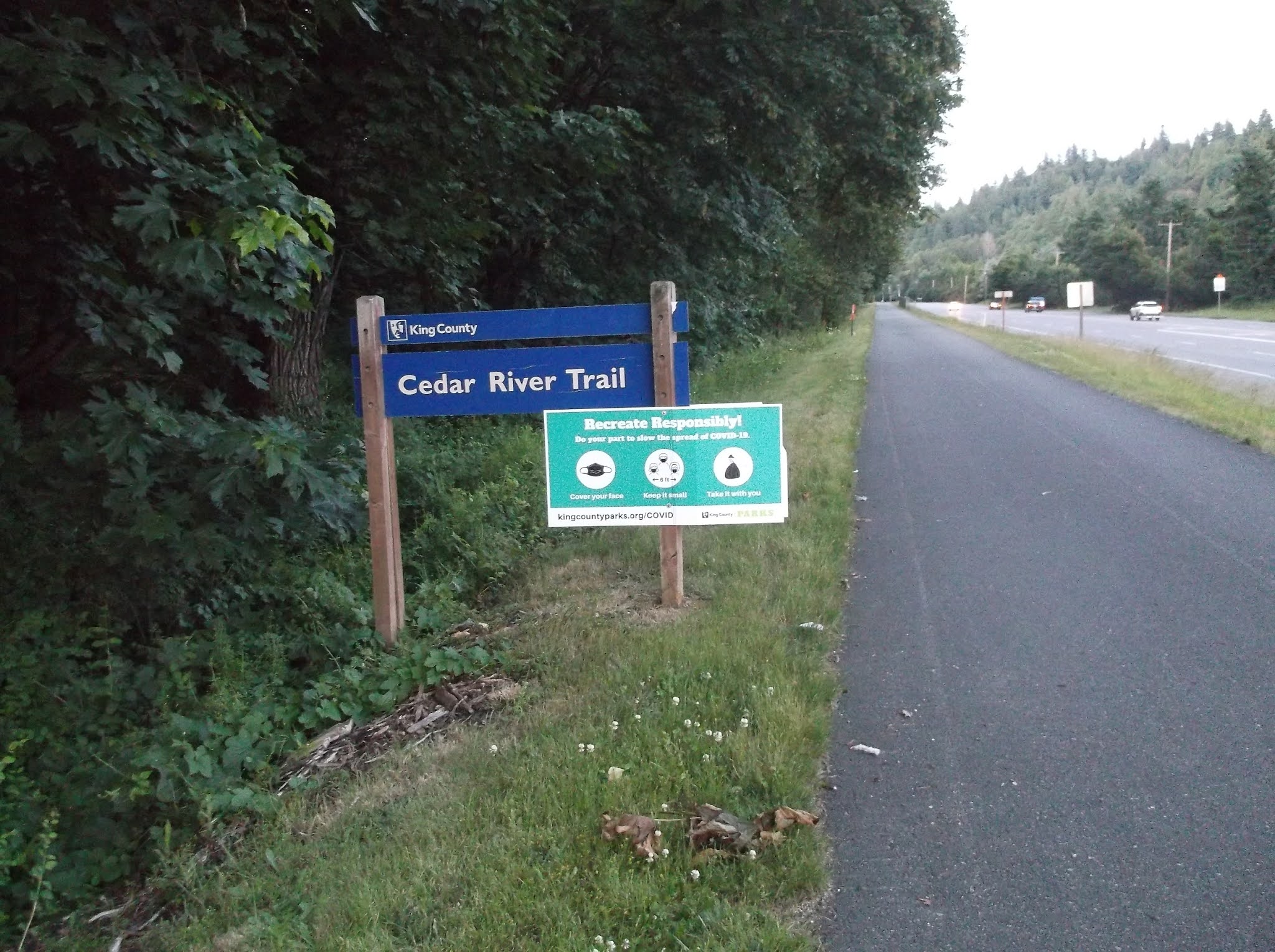
From last year's attempt to close the Trail completely, to this year's "Recreate Responsibly". Progress?

Earlier this evening I took a spin around the Shortwave radio dial, before I took a spin on my trusty, Japanese-made, Zebra-Kenko, purple 10-speed bicycle.

Both events gave me a picture of what may be the 'new normal' -- the second 'spin' being the more positive of the two.

As I rode my bike, the sun was starting to set, but it was warm out, about 68 degrees (around 15C). It was nice out -- there were still some clouds in the sky, but it had been a pleasant day.

When I rode my bike down the trail to a nearby park there was a Softball game in session: two teams of regular folks, wearing team T-shirts, pitching, batting and hitting bright fluorescent green softballs. I saw a few extremely high, foul balls being hit, and a few base runs.

An amateur Softball game taking place. One year ago, all Softball games were banned, because of the Corona lockdowns.

No one was wearing masks, and there was no social distancing. I am guessing that most, if not all of the players, who looked to be in their 30s, were vaccinated. Of course, I didn't ask. But it would have been a natural conclusion to reach. As the players played ball, a few spectators (family, mostly) watched, some of them eating and drinking refreshments -- there were some chips and donuts sitting out on one of the nearby tables. Some kids were drawing figures on the concrete by the bleachers, using colored chalk.

It was really nice seeing a Softball game, and seeing people enjoying themselves. Last year at this time, the parks were closed to all sports, and everyone was under lockdown. This year? It's feeling more 'normal'.

I am due for my second corona vaccine shot this week. Two weeks later, technically, I will be 'fully vaccinated', whatever that means. 

I stopped by an old 100 year-old bridge abutment, which used to support a box-girder bridge. The bridge was torn down in the mid-2000's, so now the concrete abutment (to the right side of this pic) is just a massive 'boulder' near a swimming hole. Across the river some people have their bonfire pit. Sometimes in summer one can see them all sitting around the fire.


A view downriver, as dusk rolled in. The river is low for this time of year. 


The swimming hole. I don't know if it is used much, but it's 3-4 feet deep, about right for a short swim in the summer when the water gets warmer. And there's a nice rock to use to climb into the water.

My own life, personally, hasn't been affected that much by coronavirus, as I live alone, and work in a small office with just one other person. I don't go out to pubs normally, and shopping has just been for necessities once a week or so -- and it's been that way for the past three years, as I was caring for a relative.

Maybe once or twice a month I get a latte at a Starbucks or other espresso stand somewhere. Sometimes I get a burger at a fast food, drive-in window. 

So my life hasn't been personally messed up by coronavirus. And luckily, I haven't caught it. I am not saying this to gloat, by the way. Roughly half of my readers are overseas, and that includes countries which are having severe troubles with Covid-19. My thoughts and prayers go your way. We are all in this together as human beings. We have survived pandemics before. Hopefully enough vaccines will become available that everyone will be able to receive one.

That said -- I'm looking forwards to normalcy here in my region of Washington state. It's nice to see people play a game of Softball or Cricket (which I used to see played in the same park). It's nice to be able to go to a karaoke pub, or a music venue (what few music venues there are left in Seattle, and it's not many -- they were decimated long before coronavirus hit). It'll be nice to go down to the lake and fish for yellow perch with my cheap looking, thrift-store fishing pole -- or swim, or just sightsee, and not worry about a virus. Hopefully, that can happen.

So, during my bike ride this evening, I had a small taste of that sense of 'normalcy'. It was nice.

...AND TAKING A SPIN ON THE RADIO DIAL

Also this evening, I took a spin on my radio dial, and I also had a small taste of the future of Shortwave Radio -- what I fear may be the new 'normal' on the High-Frequency airwaves.

Now, as some of you may know, I posted an article a couple weeks ago on Shortwave Radio, which was subtitled "Get 'Em While You Can," meaning: get those SW radio stations logged, recorded, etc., while they're still out there.

There was a reason for that subtitle -- the reason being that Shortwave Radio, as a broadcasting medium, is dying. It's on its last legs. Part of it is stations not making enough money, or not getting enough government backing. So there are stations cutting hours, and some are going off the air. 

The bigger part of it is sunspots, which make the Shortwave radio spectrum work well.

Now, I hang out at several radio forums, including some inhabited by ham radio guys, MW DXers and SWLs, and right now some of them are talking sunspots. There are even pictures of the new activity on the surface of the sun. This is supposed to mean that things are slowly getting back to 'normal' on the Shortwave bands, which include some of the most important ham radio bands (10 meters, 12 meters, 15 meters, 17 meters, 20 meters, 40 meters, and 80 meters).

I've monitored the SW bands ever since I was a kid. I've monitored the SW amateur ("ham") radio bands during much of that same period. I've monitored SW during the peaks of solar cycles and the bottoms of solar cycles -- and never, in my life, have I seen such abysmal SW conditions as I have the past 4-5 years.

The 19 meter SW broadcast band (15000-15400 Khz) is a good example. Solar cycle in, solar cycle out, in the past there was always activity on the 19 meter band -- usually during the afternoon. Even when the solar cycles were down, there would be a few stations present during the late afternoons -- Radio Moscow, France, the BBC, VOA to Africa and Asia, Deutsche Welle, Radio Canada, Cuba, etc. The 19 meter band was the highest frequency SW broadcast band that was reasonably dependable, year round, even when the sunspots were down.

The past 11 Sunspot Cycles, from 2015 back to 1900. I was an SWL DXer during the past 4 of them, including the 'bottom' periods (2010, 1996, 1987) and I have never heard such atrocious conditions as I've heard curing the past four years -- which are the bottom of the most recent cycle.

Over the past 4-5 years, I often don't even hear WWV on 15 Mhz. And that's with a better radio than I had in 1985 or 1996, when there were dips in the solar cycle, but WWV on 15 Mhz was still generally a regular, no matter what time of the year, no matter whether the sunspots were up or down. Even during those dips in sunspots, the 19 meter band had many more signals than it does now, and WWV would be audible almost 90% of the time.

In the past, even during the bottoms of sunspot cycles, 25 meters and 31 meters were both slammed with signals. Not so recently.

Back in 1996 I was able to hear Radio Turkey (on 31 meters) all night on a radio like this, and 60-100 ft (20-30 meters) of wire. That was even during the bottom of Solar Cycle 22! Over the past four years, the Voice of Greece -- another high-powered station located in the same region of the world, broadcasting on roughly the same beam (towards the EU and ultimately the US), which used to be audible nightly 8-9 years ago -- is mostly MIA. It's at least one indication that Solar activity isn't exactly up to snuff.

Earlier this evening, when I took my spin around the 31, 25, and 19 meter bands, I heard a total of 15 stations, and just over half of them were unreadable -- just traces of audio, where you can't ID the language the person is speaking, or ID the music. Some stations were just signals with no audio heard.

LA VOZ MISSIONARIA!

Now -- I did catch La Voz Missionaria on 9665 Khz, coming in from Brazil -- I could identify the Brazilian Portuguese the guy was speaking. That was cool. There were deep fades, but I could ID the Portuguese language. I have heard this station a few times over the past couple years, usually unreadable, and 'in the mud', but about 8-9 years ago I could pick it up fairly regularly (usually on my Panasonic RF-B45 and 25 ft. indoor wire), and I could hear the preachers talking in Portuguese, and some praise music. I do not understand more than a couple words of Portuguese, but I can ID the language very well as I have heard it on the SW band so much. 

La Voz Missionaria play a lot of Brazilian Christian praise music, and you will also hear preaching in Portuguese -- if you know Spanish (a related Romance Language) you'll be able to pick out the words "Senhor" (Lord), "Deus" (God), "Biblia" (Bible), and other Christian terms, which are similar to the Spanish ones.

Here is La Voz Missionaria's radio website link. It's all in Portuguese, but has some phrases about the station that should be understandable to someone who has taken Spanish. I give these folks credit for staying on the air, especially on the Shortwaves!:

Quem Somos - RĂ¡dio Voz MissionĂ¡ria (radiovozmissionaria.com.br)

The antennas and studios of La Voz Missionaria, a Brazilian station located in the city of Camboriu in the southern state of Santa Catarina. La Voz Missionaria broadcasts to the poorer regions of NE Brazil, particularly the Sertao. (Photo courtesy of La Voz Missionaria's website).

La Voz Missionaria is apparently part of a greater Christian ministry that reaches out to the poorer Brazilians in the NE of Brazil -- the Sertao (a dry region where a lot of poor people live) and the regions around the Rio San Francisco, which -- at least according to my Brazil tour and picture book -- has an economy that varies, naturally affecting the lives of the people.

The station itself is located in Camboriu, Santa Catarina state -- a small city just inland from a resort beach city called Balneares Camboriu, which apparently is popular with European, South American, and even North American tourists. For those who are savvy with your geography, Camboriu is just north of the bigger, resort city of Florianopolis (which appears on most world atlases and globes, and is easy to bring up on Bing or Google maps).

Camboriu apparently has a great climate -- an average temperature of 60-70 degrees F (15C-20C) year 'round. :-)

Voz Missionaria's website has a few videos and other information about what they do. With all the negatives we SWLs often hear about the SW medium ("it's useless", "no one listens to Shortwave"), it's refreshing to see an organization of any type using SW to reach people with a message and some entertainment (Voz Missionaria plays music, too).

Speaking of Brazil, earlier this evening I also logged Radio Nacional da Amazonica on 11780 Khz, with an S3-S4 signal but very low modulation. They usually have very clear audio when I hear them. But I think there may be something haywire with their equipment. But they were indeed on the air. That was cool

But otherwise, aside from Cuba and US Domestic broadcasters, the SW bands I tuned across were DEAD.

I can appreciate the enthusiasm of the radio hobbyists who are trumpeting the start of "Solar Cycle 25" (actually there have been millions of solar cycles -- there's only been 24 recent cycles that we humans have tracked since we had the technology to do so), saying we're going to get back to awesome conditions again within a year or two.

I am more guarded. This last solar dip was horrible. It may have been an anomaly. After all, I am not a solar scientist. But what if it isn't an anomaly? After all, solar scientists told us that the last solar cycle, number 24 (which went from 2009 until this past year), was the weakest in a century -- as shown in this NASA graph released in 2014:

A Solar Cycle graph, courtesy of NASA, showing the past three Solar Cycles. Notice that each one has lower peaks, with "Cycle 24" having half the sunspots of "Cycle 22". Some solar scientists think this trend may continue through the next cycle, Solar Cycle 25. If current radio propagation conditions are any indication, they may be right. 

That's why I encourage those of you readers who are radio hobbyists -- Get 'Em While You Can. Stations may be going off the air due to demographics, governmental budgets, church and ministry budgets, and the like. Even those stations with programming you dislike, give them a listen. Because I would wager that in ten years, very few, if any of them, will be on the air, and your SW radio will be a cool looking paperweight or static receiver.

...AND MORSE CODE CAN HELP

I also encourage my fellow SW radio hobbyists to monitor the ham bands, and try to learn Morse Code, even if it's just the basics. The ham bands haven't been exactly crawling with signals the past few years, and any ham will tell you that probably half of the licensed amateurs in the US are inactive -- and undoubtedly moreso because of the miserable conditions over the past several years.

Some of them will come back on the air, and the ham bands will see some more activity from the years 2022-2026. I've found that even when the sideband portions of the ham bands are inactive, the Morse Code sections of the ham bands (CW, as it's called officially) are often fairly, or somewhat, active with signals. These "CW" sections of the ham bands are the lowest portions of the SW ham bands (3500-3700 khz, 7000-7150 khz, 10100-10150 khz, 14000-14100 khz, and 21000-21150 khz seem to have the most CW activity). 

Usually, once you learn enough code, you can at least ID the call letters of most of the guys sending a CQ. It helps that when the ham guys send CQ, they repeat it over and over, along with their callsign. This gives the beginning code learner a chance to get the letters down and ID the station.

Being able to read at least basic Morse Code gives you more to listen to when you're tuning around. Sometimes the SW broadcast bands will be MIA and the nearby ham bands will still have some activity.

Just food for thought. 

I am still editing my article on the Grundig G2, which needed some pics of the menus and the like (my camera, for some reason, had trouble capturing pics of them, possibly due to the brightness of the G2's LCD display). I hope to get that article up on that fun little radio before June is out.

I'm closing this post with a pic of my cat Boots. I had him from 1996 until 2004, when a coyote killed him by the side of the street. He was a talkative character. I still miss him. I had a dream about him a couple nights ago, hence me pulling up this particular cat pic. If you live in coyote country, folks, please keep your cats inside.

Until later, my friends, Peace.

C.C., June 15th, 2021.